
The best Namecheap alternative overall is Openprovider, with membership-based registry-cost domain pricing across 2,000+ TLDs and an API built for scaling resellers, now with a MCP server for AI-assisted management. Cloudflare Registrar passes on registry pricing with minimal markup for domains already parked on Cloudflare’s own DNS, a narrower deal than Membership’s cost-price access across 2,000 domain extensions. While Porkbun is a strong pick for hobbyists chasing the lowest sticker price, it isn’t built for resellers scaling past a handful of domains.
Namecheap built its name on $0.99 first-year domains. In 2026, renewal hikes, reseller limits, and aggressive upsells pushed users elsewhere.
Here’s how 7 alternatives compare on price, renewals, WHOIS privacy, TLD count, API quality, and support, with a clear winner for resellers and separate picks for individual buyers and hobbyists.
Why look for a Namecheap alternative?
Namecheap remains a solid, well-supported registrar. Still, a few limitations lead some users to look for other options.
- Renewal price hikes after year one. .com domains are registered for $10.98, often discounted to ~$6.79 to ~$7.00. Renewal jumps to $18.48, a 68.% hike.
- No true wholesale or reseller program. Reseller hosting is flat-priced, with no volume tier that caps margins the way a cost-price membership does.
- Limited API depth and bulk-action tooling. Namecheap is built for individual buyers, so bulk actions across large portfolios take more manual work.
- Customer support inconsistencies on large portfolios. Bigger domain counts often mean less consistent support response.
- Competitors now offer cost-price pricing. Cloudflare passes on near-cost pricing for its own DNS. Porkbun and Dynadot hold flat rates while Openprovider offers registry-cost pricing through Membership.
How we ranked the 7 alternatives to Namecheap
We ranked each registrar based on factors beyond headline pricing, checking each criterion against the registrar’s own page or public review data. Here’s what we looked at.
- Transparent pricing. Registration price checked against actual renewal price.
- TLD coverage. The number of top-level domains the registrar supports.
- Free WHOIS privacy. Bundled at no cost, or as a paid add-on.
- API and automation. REST API, bulk actions, and billing integrations like WHMCS or Blesta.
- Reseller program availability. A true cost-price or wholesale tier, not just a retail account.
- Customer support quality. Public Trustpilot/G2 data if the review volume is meaningful.
- ICANN accreditation and security posture. Accreditation plus DNSSEC, 2FA, or ISO 27001.
7 Top Namecheap alternatives head-to-head comparison
| Registrar | Best For | .com Registration | .com Renewal | Free WHOIS Privacy | TLDs | Reseller Program |
| Openprovider | Resellers, agencies, MSPs | $10.46 (First-year member price) | Registry cost (Membership) | ✅ | 2,000+ | Yes, registry cost-price via Membership program |
| Cloudflare Registrar | Individuals, developers | Registry price (Cloudflare DNS required) | Same as registration | ✅ | 390+ | No |
| Porkbun | Hobbyists, indie builders | $11.08 | $11.08 | ✅ | 560 | Limited |
| Dynadot | Domain investors | $10.88 | $10.88 | ✅ Eligible TLDs | 800+ | Bulk tiers |
| Squarespace Domains | Existing Squarespace users | Free with annual plan (year 1) | $20 (.com) | ✅ | 300+ | No |
| Enom | Established resellers | From $11.50 (Varies by tier) | From $11.50 | ✅ Paid on some TLDs | 550+ | Yes, tiered |
| GoDaddy | Brand recognition seekers | $0.01 (promo price) | $22.99 | ✅ Paid on some TLDs | 500+ | Yes, Discount Domain Club |
1. Openprovider: Best overall and best for resellers
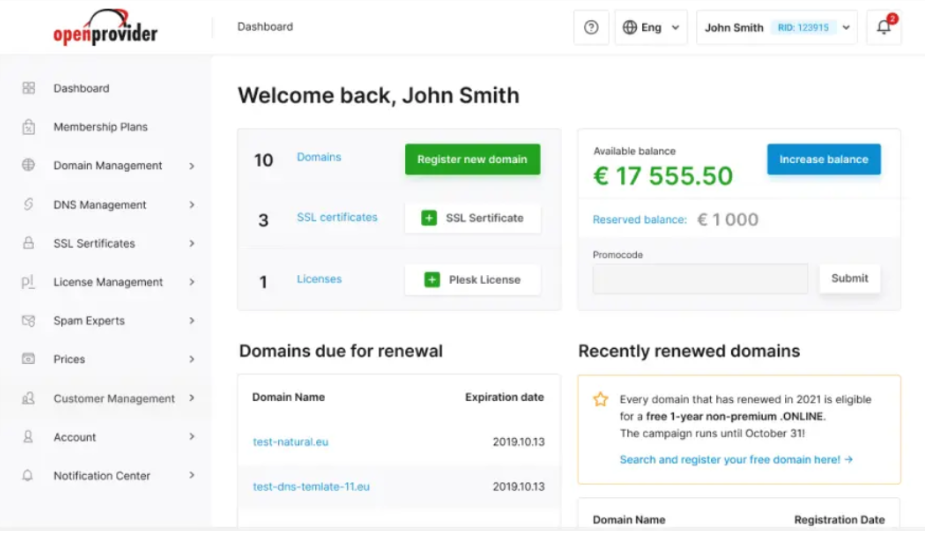
Openprovider is a Rotterdam-based, ICANN-accredited registrar built for resellers, agencies, and hosting companies rather than solo buyers. Openprovider’s core offer is Membership, a paid tier that unlocks domains at cost, with no retail markup layered on top of the registry price. Lower costs means higher margins.
Openprovider is a good alternative to Namecheap for resellers because it offers predictable, registry-cost pricing and tools designed to manage client domains at scale. Our MCP server lets AI assistants handle domain, DNS, and SSL tasks through plain-language requests, right alongside the existing REST API.Plus, Openprovider, with 4+ million domains registered, gives you 24/7 support in multiple languages.
Why it tops the list:
- Membership-based registry-cost pricing on 2,000+ TLDs: no first-year discount trap, no retail markup, no renewal surprises.
- One OpenAPI-spec compliant API and control panel covering domains, SSL, Premium DNS, email, and Plesk licenses, same auth, same base URL, every product
- MCP server connects AI assistants like Claude to your account for domain checks, DNS updates, and SSL orders
- Integrations with WHMCS, HostBill, Blesta, and other reseller billing platforms
- No upselling to your customers, Openprovider stays behind the scenes
Cons
- Best value for wholesalers, not for one-off buyers
- No drop-catch/backorder service
Choose Openprovider if: You’re a reseller, agency, hosting company, or MSP that wants domains at true registry cost-price and API-first infrastructure built for bulk automation.
2. Cloudflare Registrar: Best for individual developers
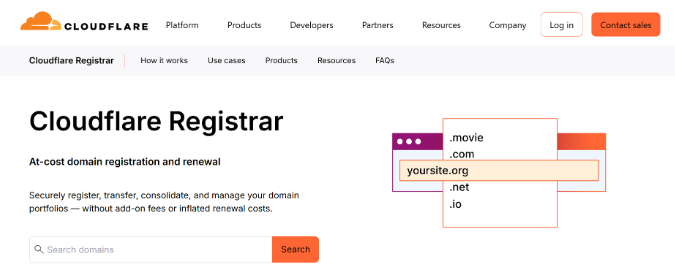
One of the best alternatives to Namecheap is Cloudflare Registrar, which sells domains with no markup added at registration or renewal. However, Cloudflare’s pricing model applies only to domains that already use Cloudflare as their DNS provider, so this restriction rules out registering a fresh domain independently of Cloudflare’s network.
Pros
- Supports over 390 TLDs, including .com, .net, and .org
- At-cost pricing with zero markup (one of the cheapest in the market)
- Free WHOIS privacy, DNSSEC, and Universal SSL
- Tight integration with Cloudflare’s DNS and CDN
Cons
- Only works with domains using Cloudflare DNS.
- There’s no reseller program
Choose Cloudflare if: You’re a solo developer or a small-site owner already using it for DNS.
3. Porkbun: Best for hobbyists and indie builders
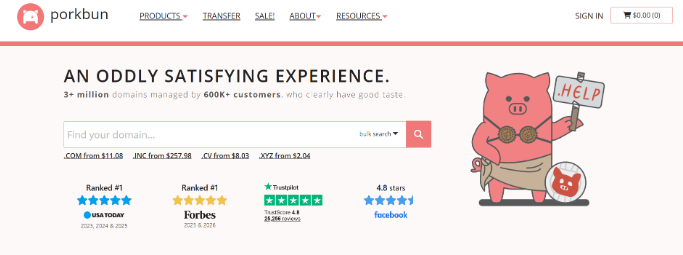
Another decent Namecheap alternative is Porkbun, an indie-friendly registrar known for transparent pricing. Porkbun charges $11.08 for .com domains registration, renewal, and transfer, all at the same flat rate. Porkbun supports 560 TLDs, over 100 extensions more than Namecheap.
Pros
- Cheap .com renewals
- Free WHOIS privacy, SSL certificates, and URL forwarding
- Up to 20 free email forwards are bundled with every domain
- Polished user interface
Cons
- No dedicated reseller program
- Smaller infrastructure than enterprise registrars
Choose Porkbun if: You want a sub-$12/year .com and a simple dashboard.
4. Dynadot: Best for domain investors
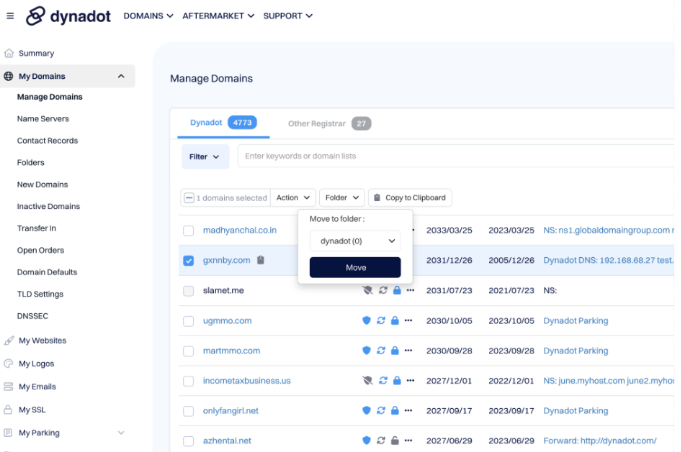
Founded in 2002, Dynadot has grown into a platform favored by domain investors for its auction and marketplace tools as well as standard registration. Dynadot charges $10.88 for the .com extension. This flat price applies to registration, renewal, and transfer. Dynadot lists over 800 extensions, eclipsing Namecheap’s 437.
Pros
- Strong tools for aftermarket buyers
- Free WHOIS privacy on eligible TLDs
- Great auction and marketplace tools
- Bulk account tiers with bonus perks for larger portfolios
Cons
- Dated interface compared to modern alternatives
- High renewal costs
Choose Dynadot if: You buy/sell domains and need auction and bulk tooling.
5. Squarespace Domains: Best for existing Squarespace users
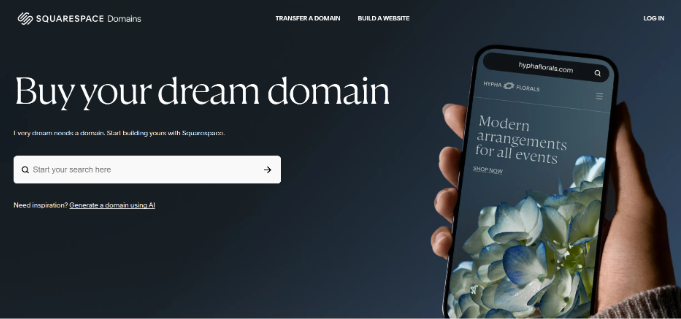
One more alternative to Namecheap is Squarespace, which acquired Google Domains in 2023. On Squarespace, common TLDs like .com and .org cost $20 per year, while specialty extensions such as .media and .photography cost $30 to $50 a year. Every annual Squarespace website plan includes one custom domain free for its first year.
Pros
- Free WHOIS privacy and SSL certificates
- Clean user interface
- Up to 100 email forwarding addresses for free
- Solid integration with Squarespace sites
Cons
- More expensive than flat-rate registrars after the free first year
- No reseller program
Choose Squarespace if: You’re building or already running a Squarespace site.
6. Enom: Best established reseller platform
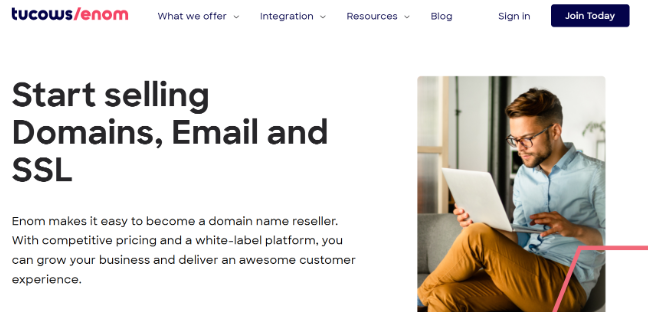
Another solid Namecheap alternative is Enom for web professionals needing a legacy reseller platform. Enom is one of the longest-running wholesale registrars and charges a one-time $50 signup fee to activate a reseller account. Enom’s reseller tools are built for white-label domain management, not a single personal domain.
Pros
- Wide TLD catalog of 550+ extensions
- Mature reseller and white-label tooling built over decades
- Mainstream brand trust
- An established API with a long track record
Cons
- Pricing tiers can be opaque
- WHOIS privacy is a paid add-on
Choose Enom if: You want a legacy reseller platform with a long track record.
7. GoDaddy: Best for brand recognition
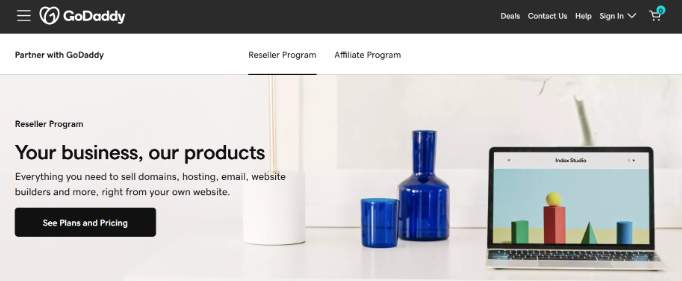
GoDaddy is the largest registrar by volume for buyers who want brand recognition. GoDaddy serves 20+ million customers and manages 82+ million domains, with new-customer .com promotions starting at $0.01 for the first year. Domain transfers cost $12.99 and include one free year of registration.
Pros
- Supports over 500 domain extensions
- Free domain privacy is included with most registrations
- Mainstream brand trust, especially in the US
- Discount Domain Club for managing larger portfolios
Cons
- Aggressive checkout upsells
- Expensive renewals
Choose GoDaddy if: You want the most recognized name and don’t mind paying retail.
Namecheap alternatives: Take your pick
So, which one of these alternatives to Namecheap is best for you?
If you are a fast-growing domain reseller, Openprovider’s cost-price Membership model and API-first architecture make it the strongest long-term fit. If you’re a solo developer already inside Cloudflare’s ecosystem, its near-cost pricing is a good fit, though it limits your TLD choice.
Hobbyists and small portfolios will find Porkbun and Dynadot the simplest flat-rate options. GoDaddy and Squarespace Domains suit buyers who value brand recognition or an all-in-one website platform over the lowest renewal price.
Want registry-cost pricing, deep TLD coverage, and support that actually helps? Check flat-price membership plans today.
Frequently Asked Questions
Is there a cheaper alternative to Namecheap?
Yes. Porkbun and Dynadot both publish flat .com pricing around $11 a year with no renewal step-up. For bulk buyers, Openprovider Membership unlocks registry-cost pricing across 2,000+ TLDs.
What is the best Namecheap alternative for resellers?
Openprovider. It’s the only major registrar built exclusively for resellers, with cost-price domains, full automation via API and WHMCS, and a no-upsell policy that protects your customer relationships.
Is Cloudflare a good alternative to Namecheap?
Yes, for individuals and developers already using Cloudflare’s DNS. It passes on registry pricing with minimal markup, but only for domains already on Cloudflare’s own DNS. It isn’t suited to reseller programs or domains outside its supported TLD list.
Why are people leaving Namecheap for other options?
Common reasons include higher-than-expected renewal fees, the absence of a true wholesale reseller program, aggressive upsells at checkout, and limited bulk-management tooling for larger portfolios.
Which Namecheap alternative has the most TLDs?
Openprovider, with 2,000+ supported TLDs, has the widest catalog among the registrars compared here.
Do all Namecheap alternatives offer free WHOIS privacy?
Most do, including Namecheap, Openprovider, Cloudflare, Porkbun, Dynadot, and Squarespace Domains. Enom and GoDaddy charge for privacy on some TLDs.