

Most domain problems don’t start with a security breach or a technical failure, but with something a lot more ordinary: a renewal that didn’t go through.
For hosting resellers and web agencies, annual domain registration feels routine. It fits comfortably alongside monthly billing, clients understand it, and in most cases, everything works as expected. The difficulty is that the renewal cycle repeats every year, and each repetition depends on payment details being current and renewal notices reaching the right person at the right time.
When billing information changes or reminder emails are overlooked, a domain can move past its renewal date without anyone intending it to happen. That’s when an administrative oversight becomes a business disruption.
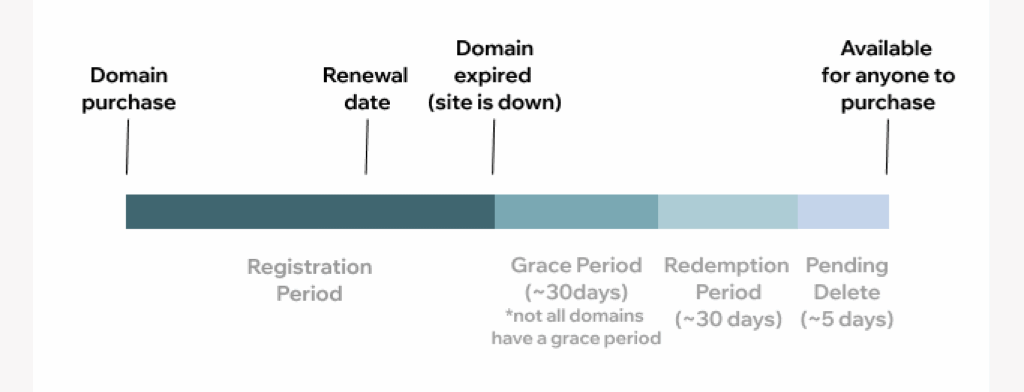
What happens when a domain expires and enters redemption
When a domain isn’t renewed on time, it moves through defined lifecycle stages before it’s released. During the grace period, renewal is usually straightforward. Once it enters redemption, recovery can involve additional fees and coordination between registrar and reseller. In some cases, services tied to the domain are interrupted until the issue is resolved.
If the domain supports a primary website or branded email, the impact can escalate quickly. Agencies may find themselves explaining unexpected downtime to clients, while hosting providers handle urgent support requests and reactive troubleshooting. The internal time spent resolving the issue often exceeds the renewal fee itself.
Managing domains on a one-year term increases how often this scenario can arise. Extending the registration period means fewer renewal deadlines to manage over the life of a domain.
How multi-year domain registration reduces renewal failures
Multi-year domain registration secures a domain for a longer continuous period. Instead of returning to the renewal process every twelve months, the domain remains active across a broader timeframe. Fewer renewal cycles mean fewer payment transactions and fewer moments where outdated billing details or contact records can interrupt continuity.
There’s also a planning advantage. When future years are prepaid, they’re generally secured at the current rate. If pricing changes during the prepaid term, those adjustments typically apply at the next renewal point. For resellers and their customers, that clarity supports more reliable cost forecasting.
Lowering the number of renewal events doesn’t remove administration altogether, but it does narrow the window in which preventable errors can occur.
The operational and revenue impact for resellers and agencies
As domain portfolios grow, the administrative load of annual renewals becomes more visible. Each domain introduces its own renewal date and its own reliance on a successful transaction at a specific point in time.
Consolidating several years into one registration term changes that cadence. Support teams encounter fewer emergency restoration cases tied to expired domains. Account managers spend less time tracking confirmations and following up on payment issues. Portfolio oversight becomes more predictable because critical deadlines are spread over longer intervals.
Multi-year registrations also influence commercial relationships. They can increase upfront revenue per customer and extend the duration of the customer engagement. When a client commits to several years on a core domain, switching providers midway through that term becomes less likely. Paired thoughtfully with longer-term SSL certificates or email services, the domain forms part of a more durable service structure.
How to offer multi-year domains without changing your billing model
Registration term and billing cadence don’t need to mirror one another. A domain can be registered for multiple years while the customer continues to pay on a monthly basis.
Many resellers introduce multi-year registration as an optional upgrade for business-critical domains. Framing it around continuity and fewer renewal dependencies helps customers understand its relevance. The discussion often fits naturally during onboarding, at contract reviews, or after a previous renewal issue has highlighted the risk.
Openprovider supports multi-year registration across most gTLDs, allowing resellers to enable this option without restructuring their broader commercial model. Implementation can be phased, beginning with selected domains rather than the entire portfolio.
Where to start with multi-year domain registrations
As you evaluate which domains to extend, it can be useful to look at the names tied to primary websites, branded emails and newer gTLD domain extensions tied to campaign microsites, product launches, and community initiatives.
Those domains function as infrastructure, yet they’re often treated as short-term transactions because annual renewal has become habit.
Most gTLDs can be registered for up to ten years in total, which gives you room to adjust gradually. Extending the term on high-dependency domains shifts them out of an annual renewal cycle and into a longer planning horizon. Over time, that change alters how often you face renewal-related disruption and how much attention is spent managing routine deadlines.
For hosting resellers and web agencies building durable businesses, that shift supports steadier operations and more predictable client relationships.